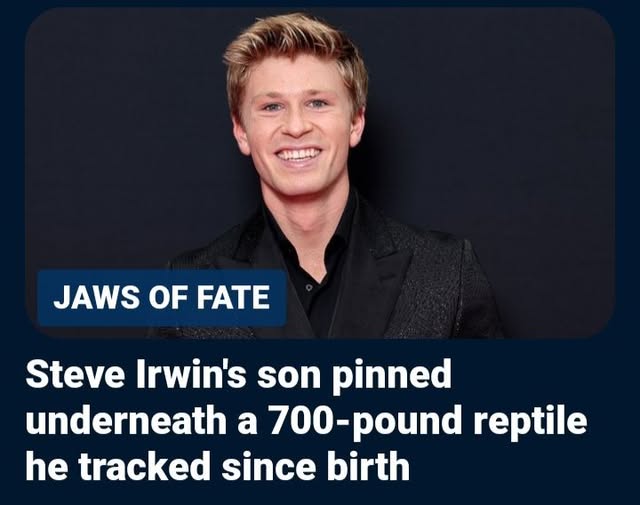
Robert Irwin, wildlife conservationist and son of the late Steve Irwin, recently drew global attention after recounting a dramatic crocodile encounter during a wildlife demonstration at Australia Zoo. The incident occurred while he was performing a high-risk research and handling technique made famous by his father.
During the demonstration, Robert Irwin engaged with a large 14-foot crocodile weighing approximately 700 pounds, nicknamed “Jimmy Fallon.” The animal suddenly reacted during the procedure, performing a powerful “death roll” maneuver—an instinctive movement used by crocodiles to subdue prey. Irwin was briefly pulled underwater and pinned beneath the animal’s forceful movement, with only part of his arm visible above the surface.
Despite the intensity of the situation, Robert was able to safely escape without injury after the crocodile released its grip. The incident highlighted both the unpredictability of working with apex predators and the controlled risks involved in wildlife education and conservation work.
Irwin later shared the experience during an appearance on The Tonight Show Starring Jimmy Fallon, where he described the moment in detail, emphasizing how quickly situations can change when working closely with crocodiles. His account underscored the importance of training, preparation, and respect for wildlife behavior in conservation environments.
The crocodile involved is part of ongoing educational and conservation programs at Australia Zoo, where controlled interactions are used to study behavior and promote public awareness about crocodile species. Staff members are trained to manage such high-risk encounters, though incidents like this remain rare and closely monitored.
Robert Irwin has continued his father’s legacy in wildlife conservation, working to educate global audiences about Australian fauna and the importance of protecting endangered species. While the incident was alarming, it ultimately ended safely and reinforced the inherent dangers of working with wild animals.
The event has since sparked widespread discussion about wildlife safety protocols, conservation education, and the ongoing efforts of the Irwin family to continue their advocacy for animal conservation under high-risk conditions.